Thursday, January 31, 2008

Really Bugging Me

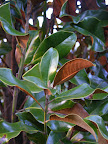
Photo Curtesy of UMass Extension

Recently I have come to realize that my biggest problems are generally self created by ignoring the warning signs when they were small problems. My Pieris japonica var. yakushimanum ‘Prelude’ has been hit hard by the Andromeda Lace Bug Stephanitis takeyai for two years in a row, my treatment plan has been limited to spraying horticultural oil just prior to June 1st in my Massachusetts garden and then to be frank I become lazy, forgetful, and disinterested by midsummer and follow up by doing nothing.
Winter is the time I make promises to my self about better gardening practices with this in mind I decided to learn more about the Andromeda Lace Bug Stephanitis takeyai (not Lace Wing the beneficial insect) with the hopes of creating an aggressive pesticide free plan to save my Pieris japonica, and I thought I would share what I have learned, my plan of action, and update you throughout the 2008 season with the plants condition.
The Andromeda Lace Bug Stephanitis takeyai is a non native insect from Japan that was thought to have been brought over on a plant. Stephanitis takeyai has adapted very well to my zone 7a environment and according to the University of Massachusetts Extension there will be as many as three to four generations of this insect in one season(May though September). One of the things that makes combating this insect so difficult is the mother lays the eggs inside the tissue of the underside of the leaf and then protects the egg further by sealing it with a shellac like substance. Both the nymphs and the adults feed on the Pieris japonica by piercing the leaf and sucking on the plant fluid, this causes the leaves to look yellowed as in my photo. The appearance of damage to the top of the leaf can look similar to damage caused by a mite attack but the underside will be very telling as the Andromeda Lace Bug will reveal the lace bug, nymph, excrement and the shellac like substance. In the photo of my Pieris japonica leaf all of that “bug juice” can be wiped off the leaf leaving only some rather large puncture holes.
My plan of action is to begin spraying the undersides of all leaves but particularly those closest to the ground with horticultural oil or insecticidal soap (undecided which might do a better job) to eliminate as many nymphs as possible and repeat this once every two weeks eliminating new generations of eggs until the end of September.

Wednesday, January 30, 2008

Save A Tree And A Trip To The Recycling Center


On a morning talk show I watched a piece about a group of fourth graders taught by Ted Wells from the Park School in Brookline, Mass who had cancelled 4175 unwanted catalogs in one month. They were able to contact and cancel such a large number of catalogs with help of a great non profit Catalog Choice Lets face it most of us have limited time to devote to non-urgent chores but this was simplistic and fast, after logging on I was able to select which catalogs I wanted to cancel, and cancelled six catalogs in a period of five minutes. You will want to have the catalog in front of you as it expedites the whole process if you have your customer number from the back label. I can’t tell you how many times I have resented the burden of receiving catalogs I didn’t request and some of the worst offenders seem to send them weekly. I am not much of a shopper but I know that I send three to four shopping bags filled with catalogs to the recycling center every other month and that is not including what I immediately throw in the recycling bin at the Post Office. Many thanks to Ted Wells and his fourth graders.

Thursday, January 24, 2008

City Mouse

Hello to you all. I am new to this blog and to all of you. I live in a first-ring suburb of Pittsburgh called Mt. Lebanon in a little townhouse with enough dirt to keep me busy with flowers and herbs each year.

Lately, though, I've been gravitating more and more towards the "growing" movement of urban agriculture. I will be growing at least some of my own food this season at a community plot near where I work. Here's the website, if you're interested: http://www.homewoodgarden.net/
From what I understand, there is much sharing of crops, seeds, recipes, etc. among the gardeners here. I'm very excited!

I'd like to start my plants from seeds this year -- and I have plenty of them! This will be the first time I've tried to start lots of seeds indoors at this house, so I'm in the process of setting up a space in my basement with an industrial-style fluorescent light fixture I got from Construction Junction -- a VERY fun place to find recycled building materials and lots of other neat stuff with tons of creative potential. Here's their website, if you're interested: http://www.constructionjunction.org/

So -- my question is: Have any of you ever started seeds using grow lights or fluorescent bulbs?
I have only ever started seeds in a large sunny kitchen (NOT the one I have now) -- but never in a basement! Suggestions welcome!

Wednesday, January 23, 2008

Garden Photos of Lodges, Inns, and B&B's


I am what is best described as a novice gardener because of this I appreciate visiting gardens that I can easily adapt some elements of the design to my own smaller non formal suburban landscape. My eye just isn’t schooled enough to bring home insights from large European Castles and translate what I have seen into something appropriate on my little patch of earth. For this reason I have on occasion found gardens at B&B’s, Inns, and Lodges, to be some of my favorite gardens. I thought I would share a few garden photos of a few places I have stayed and hope you might do the same as well. This will be an on going post and from time to time I will add more photos so if your interested check back.
This lodge Kapitea Ridge is located in Hokitika, New Zealand and was photographed as fall was approaching.


Plant Wish List For 2008

CapeCodGardener suggested we all share our plant wish lists for 2008 here on this post with our names on them and ask for comments. I will go first…I must warn you my list is long and constantly changing, as CCG has already commented on my list I will share her comments with you as well. If you need any tech advise on how to add your list to this post I would be happy to help just email me.
Wish List - Katy - each plant is linked to the web site I plan to purchase from.
1. Euphorbia 'Nothowlee'
2. Kniphofia pumila
3. Tanacetum vulgare 'Isla Gold'
4. Helleborus argutifolius ‘Silver Lace’
5. Paeonia 'Bartzella’ …..an insane extravagance
6. woodland paeonia from Avant Gardens – not in catalog
7. Hydrangea Macrophylla Sharona(tm)
8. Hydrangea Macrophylla ‘Sol’
9. Hydrangea Serrata 'Kiyosumi'
10 Ilex ‘Tiasquam’ …buy locally
11 Sassafras albidum, Sassafras
12 Ilex ‘Rock Garden’….perhaps one dozen
13 Arisaema sikokianum -- Japanese Dragon Arum or Jack-in-the-Pulpit
14 Aster tataricus 'Jindai' - Dwarf Tatarian Aster


Sunday, January 20, 2008

Winter Weeding


January gardening chores in my Massachusetts garden have always been limited to reading gardening books and catalogs in front of the fireplace. This year however the invasion of Cardamine hirsute commonly known as hairy bittercress has forced me out of my cozy chair and believe it or not into my garden. Cardamine hirsuta is a winter annual that is native to Europe and Asia, but has also found its way into North American gardens primarily by way of nursery potting soil. It germinates in autumn and sticks around through the winter as a basal rosette with pinnately compound leaves as in the above photo taken a few days ago. This herb is a member of the mustard family (Brassicaceae) and although it is said to be bitter it is an edible green and has been used as a cover crop. My zone 7 humid, wet garden provides everything this plant might desire. Cardamine hirsute typically flowers sporadically in the fall, then again from late winter through out spring, but this past year I had a third (not unheard of) generation of plants in early to mid July. Small white flowers sit on top of short six to eight inch wiry green stems, these flowers go to seed and ripen at different times so by the time you have spotted your first white flower there may have been ripened seeds already dispersed throughout your garden. The seed of Cardamine hirsuta like many other mustard family plants will burst explosively, when touched, sending the seeds flying far (three to four feet) from the parent plant, and it can set seed a few days after flowering, because of this the best time to remove this dastardly plant is prior to late winter. Pulling this weed in the garden is not difficult but it has begun to take over my front lawn, I have daffodils scattered through out this area so I have in the past delayed mowing until mid spring this allowed the life cycle of Cardamine hirsute to flourish. This year I hope to have the have lawn mower out as early as the end of March, bag and dispose the clippings rather than risk throwing them into the compost pile. Yes a hot pile will kill the seeds but this plants design to set seed is so ingenious that it can ripen it’s seed after the plant has been pulled from the ground, with determination like that I won’t be taking any chances.

Tuesday, January 15, 2008